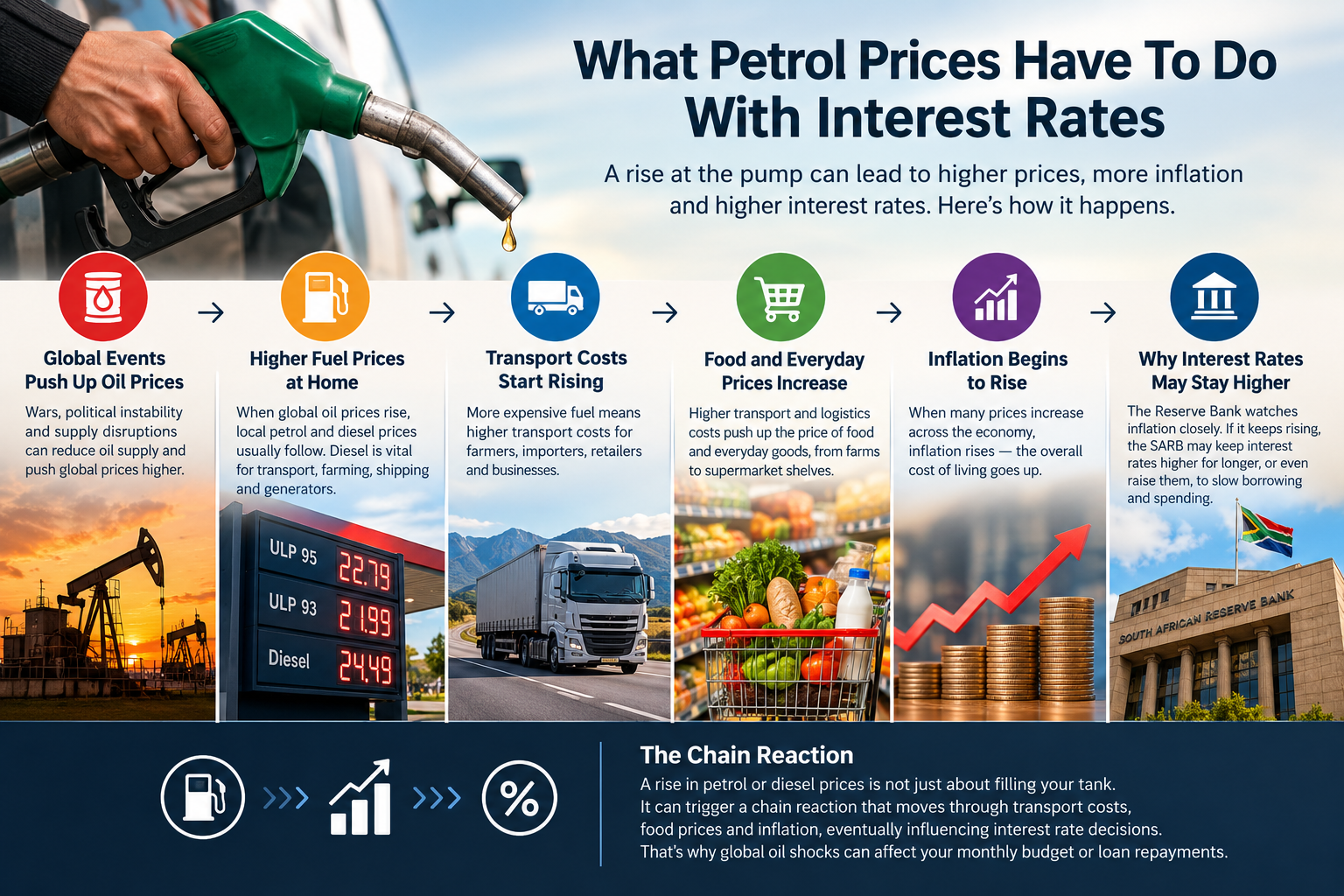
When petrol prices rise, the impact spreads far beyond the fuel pump. Higher fuel prices increase the cost of transporting goods, which pushes up the price of food and everyday services. As prices across the economy rise, inflation increases, and central banks may be forced to keep interest rates higher for longer. Here is how that chain reaction works.
Global Events Push Up Oil Prices
Oil trades on global markets, so events in one part of the world can influence prices everywhere. Wars, political instability, or disruptions in major oil-producing regions can reduce supply and push prices higher.
South Africa imports most of the oil it uses. While the country gets a large portion of its crude oil from Nigeria, the price we pay is still influenced by global oil markets. When prices rise in other regions, those increases still filter through to South Africa.
Higher Fuel Prices at Home
When international oil prices rise, local petrol and diesel prices usually follow. Diesel is particularly important for the economy because it powers many of the systems that move goods and keep businesses running.
Diesel fuels trucks that transport food, farming equipment that harvests crops, ships and logistics networks that move imports, and even generators used during load shedding.
Because diesel plays such a central role in transport and production, increases can quickly ripple through the economy. Some economists have warned that if the recent conflict in the Middle East further disrupts supply, diesel prices could rise by as much as R7 per litre.
Transport Costs Start Rising
Once fuel becomes more expensive, the cost of transporting goods increases. Trucks carrying fresh produce from farms to supermarkets must pay more for diesel. Importers bringing goods into the country face higher shipping costs. Retailers also face increased delivery expenses.
Businesses often try to absorb these costs at first, but if fuel prices remain high, they eventually pass some of those increases on to customers.
Food and Everyday Prices Increase
Food prices are particularly sensitive to fuel costs because food moves through several stages before it reaches consumers. Crops must be transported from farms to processing facilities, then to warehouses, distribution centres and finally to shops.
Each step involves transport, refrigeration, storage and logistics. When fuel prices increase, each part of that chain becomes more expensive. Over time, this pushes up the price consumers see on supermarket shelves.
Inflation Begins to Rise
When many prices across the economy rise at the same time, inflation increases. Inflation measures how quickly the overall cost of living is rising.
Fuel price shocks often lead to what economists call cost-driven inflation. This happens when businesses increase prices because their costs have gone up, rather than because demand has suddenly increased.
Why Interest Rates May Stay Higher
Central banks such as the South African Reserve Bank (SARB) closely watch inflation trends. If fuel and food prices begin pushing inflation higher, the Reserve Bank may worry that rising costs will spread further through the economy.
Businesses may keep raising prices, workers may demand higher wages to keep up with living costs, and inflation expectations can become difficult to control.
To keep inflation in check, the SARB may keep interest rates unchanged longer than expected. In some situations, it may even raise rates slightly to slow borrowing and spending.
The Chain Reaction
A rise in petrol or diesel prices is not just about filling your tank. It can trigger a chain reaction through transport costs, food prices, and inflation, eventually influencing interest rate decisions.
That is why global oil shocks can eventually affect something as personal as your monthly budget or loan repayments.